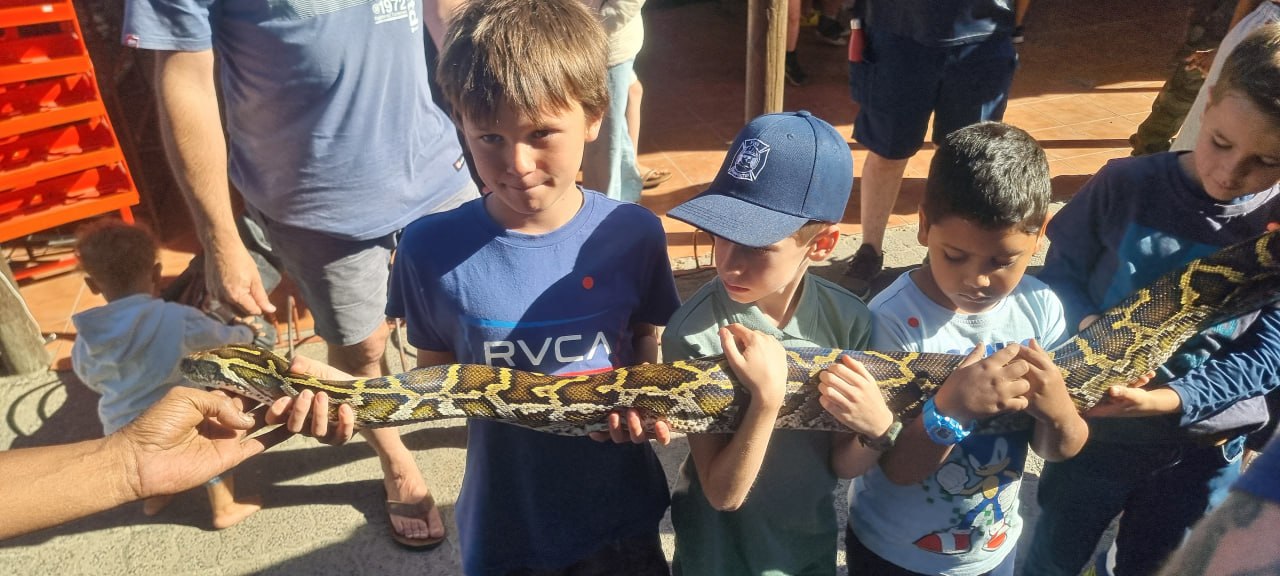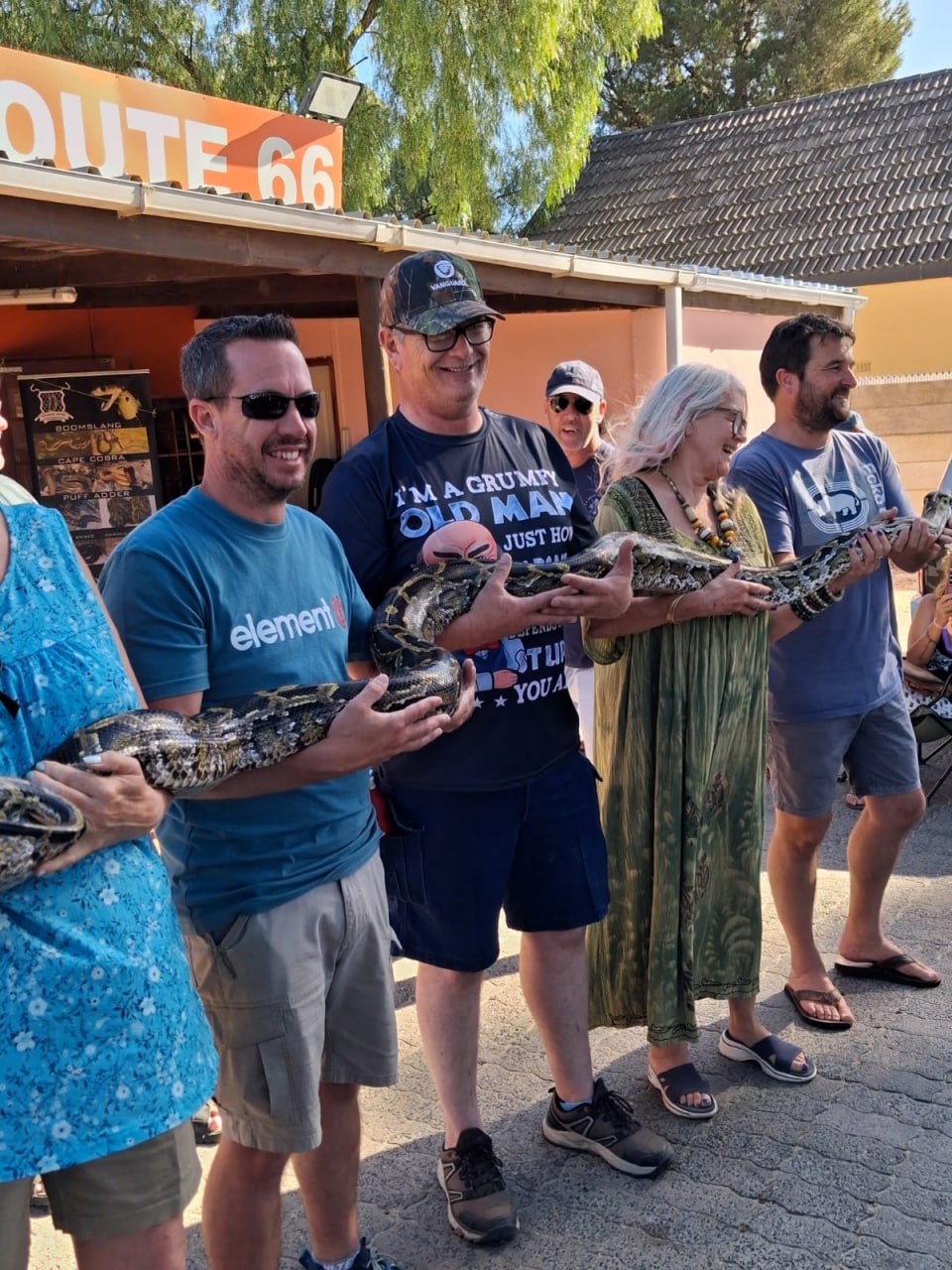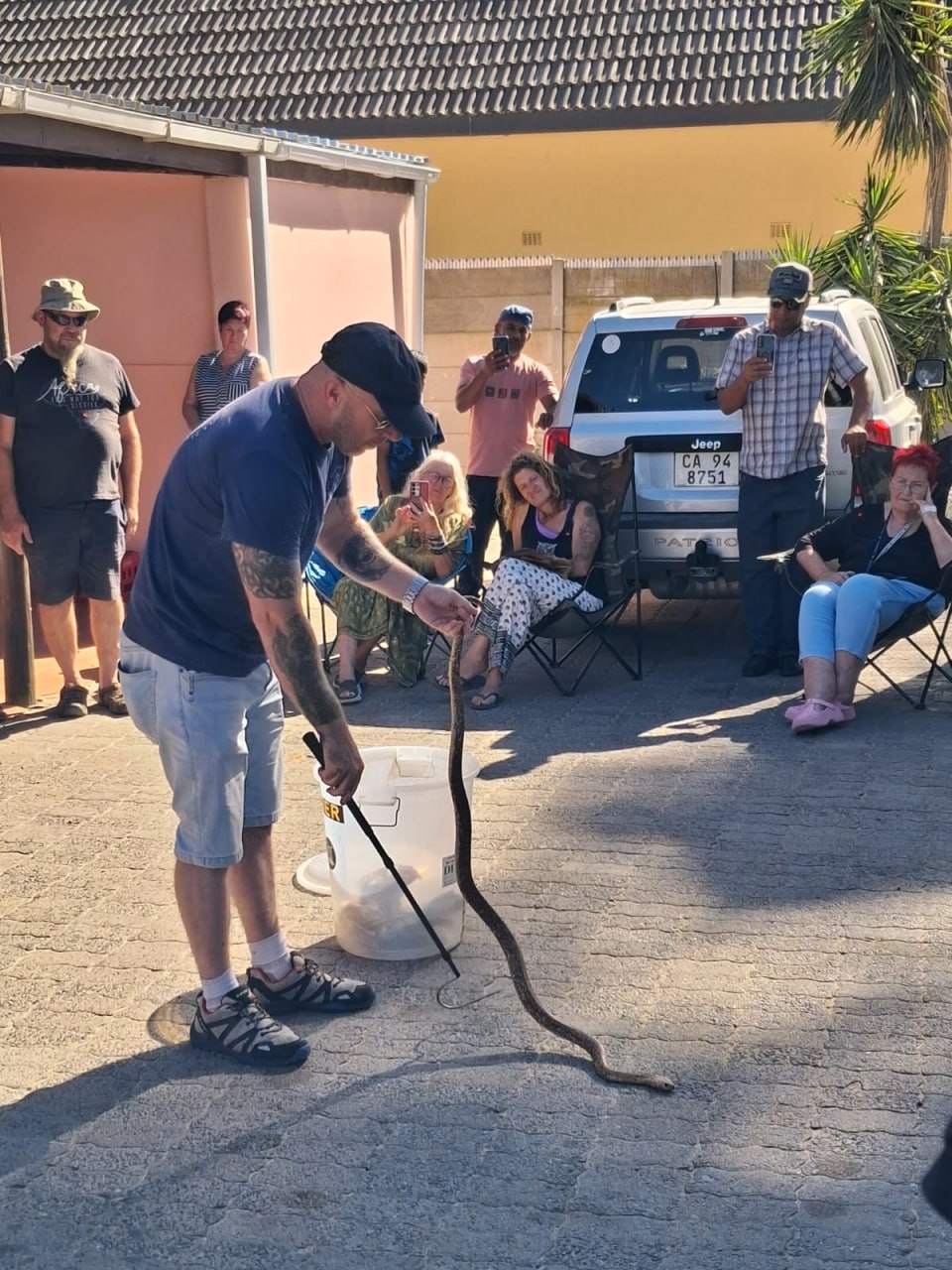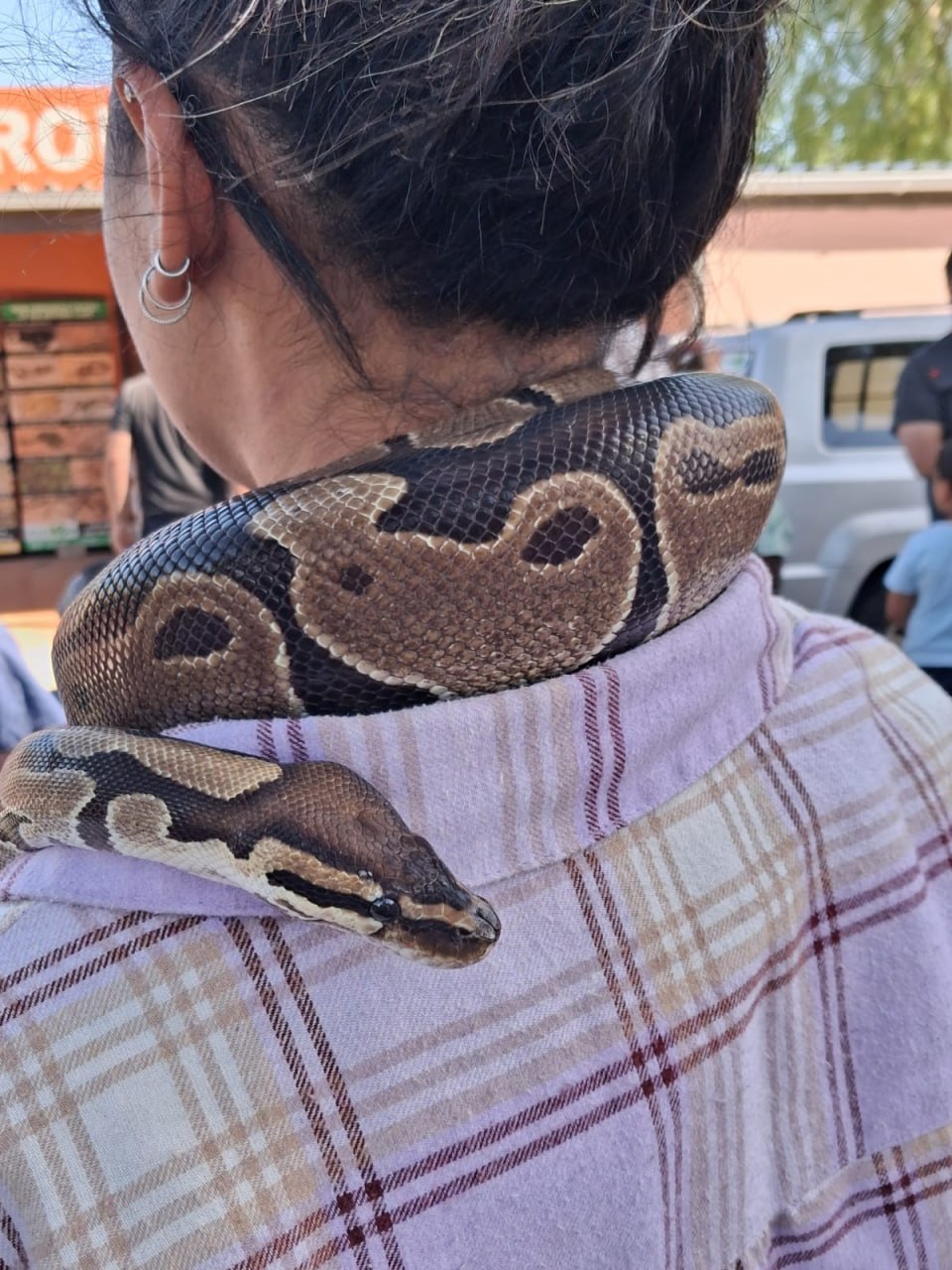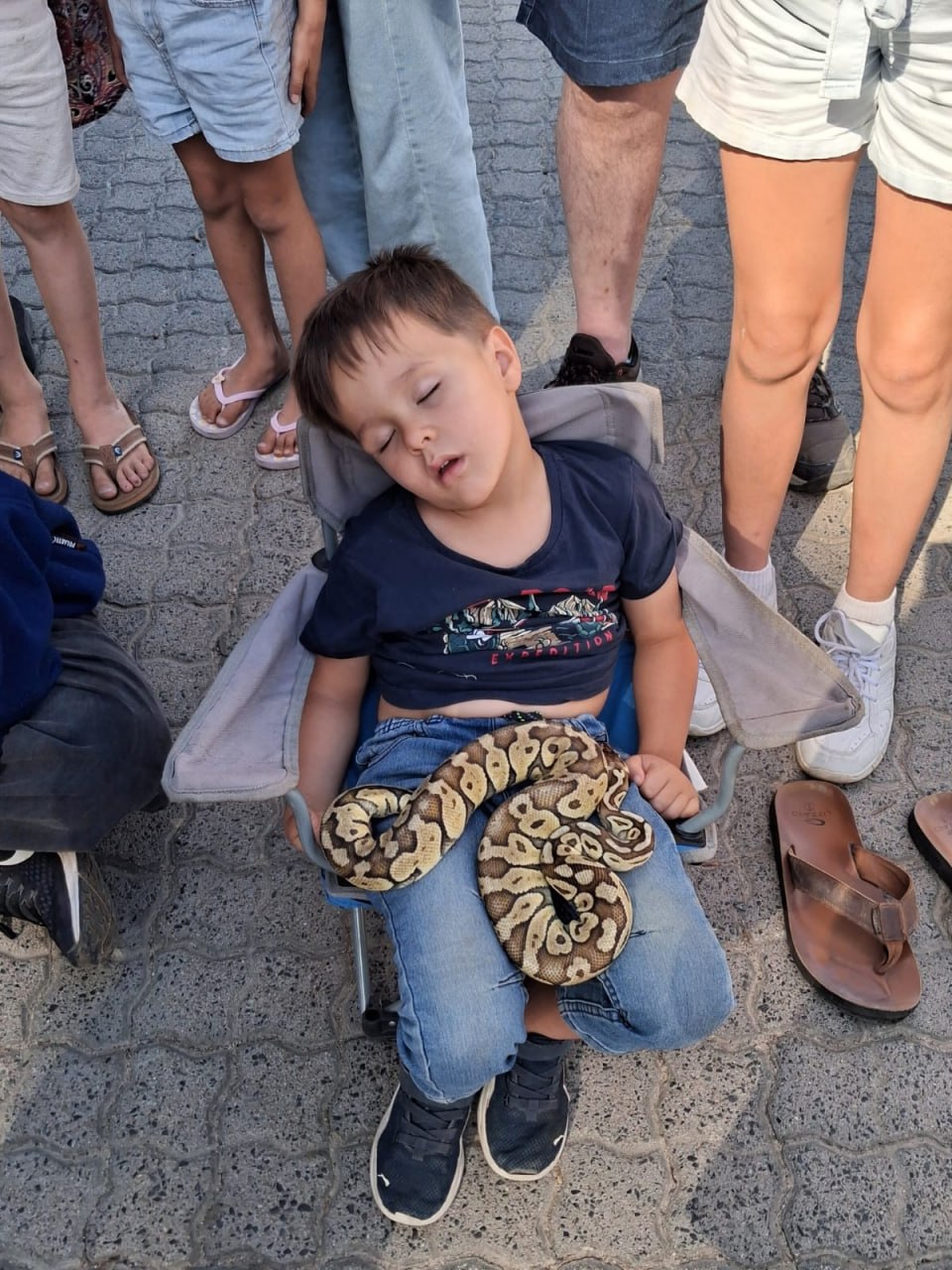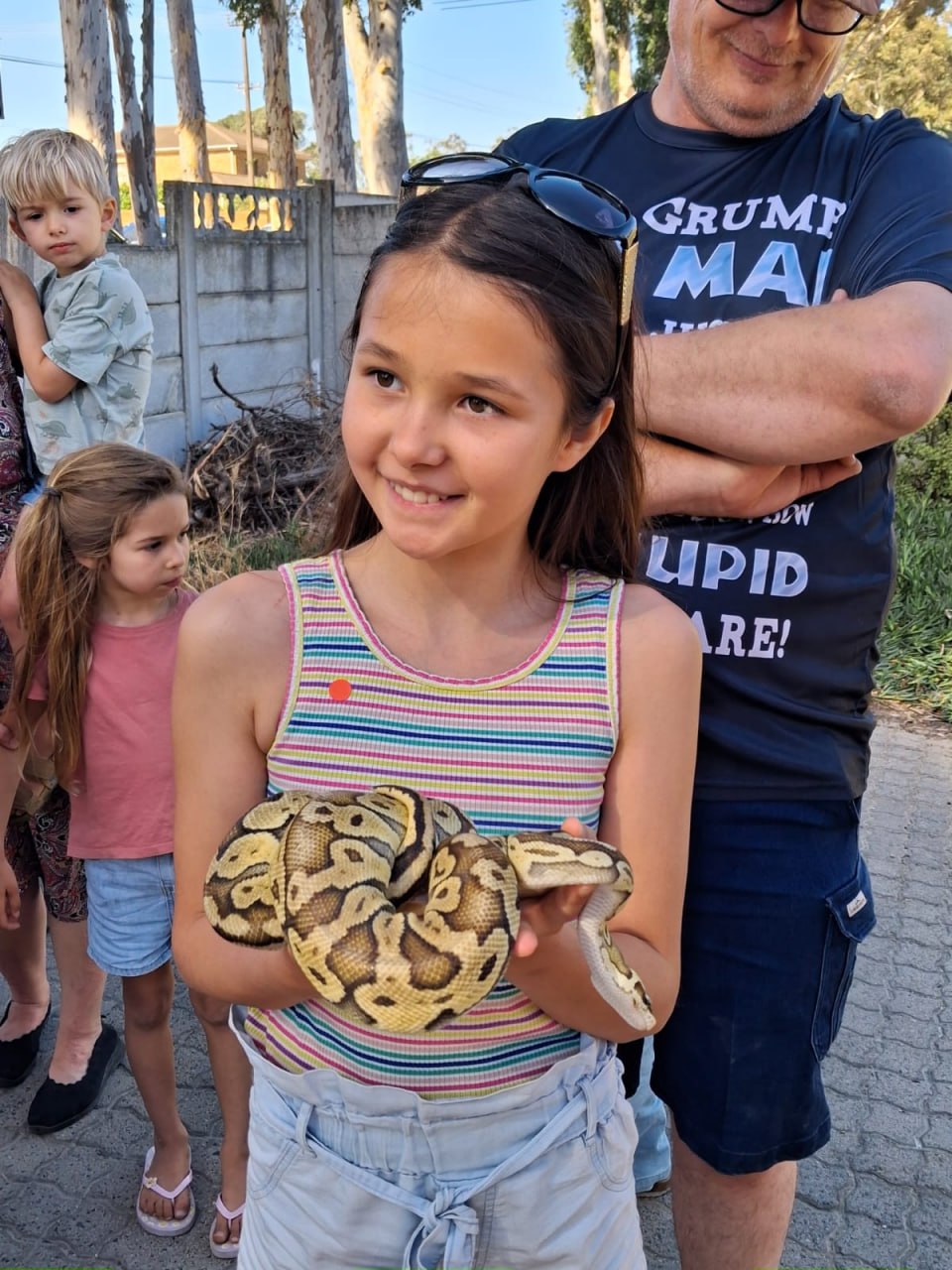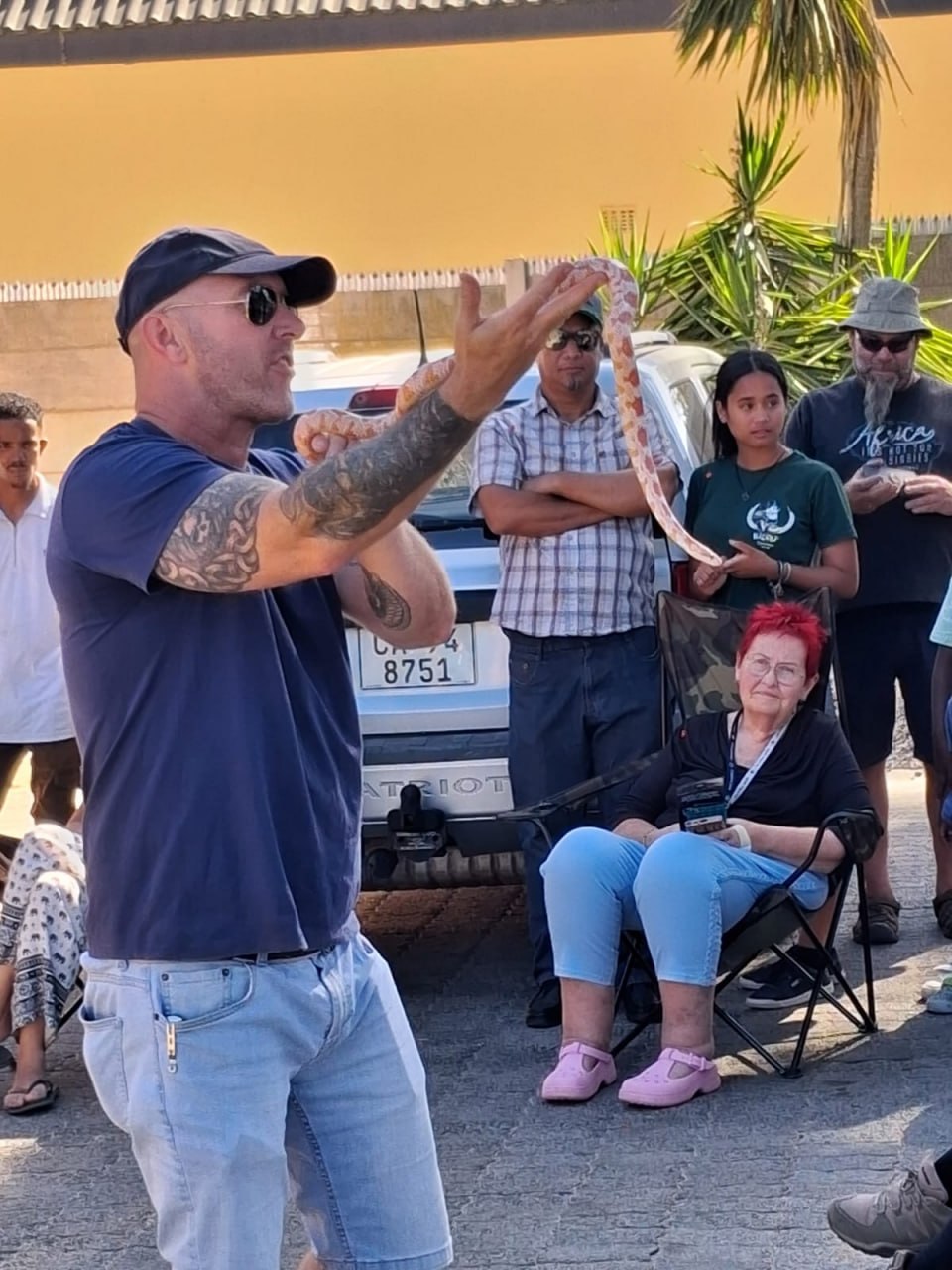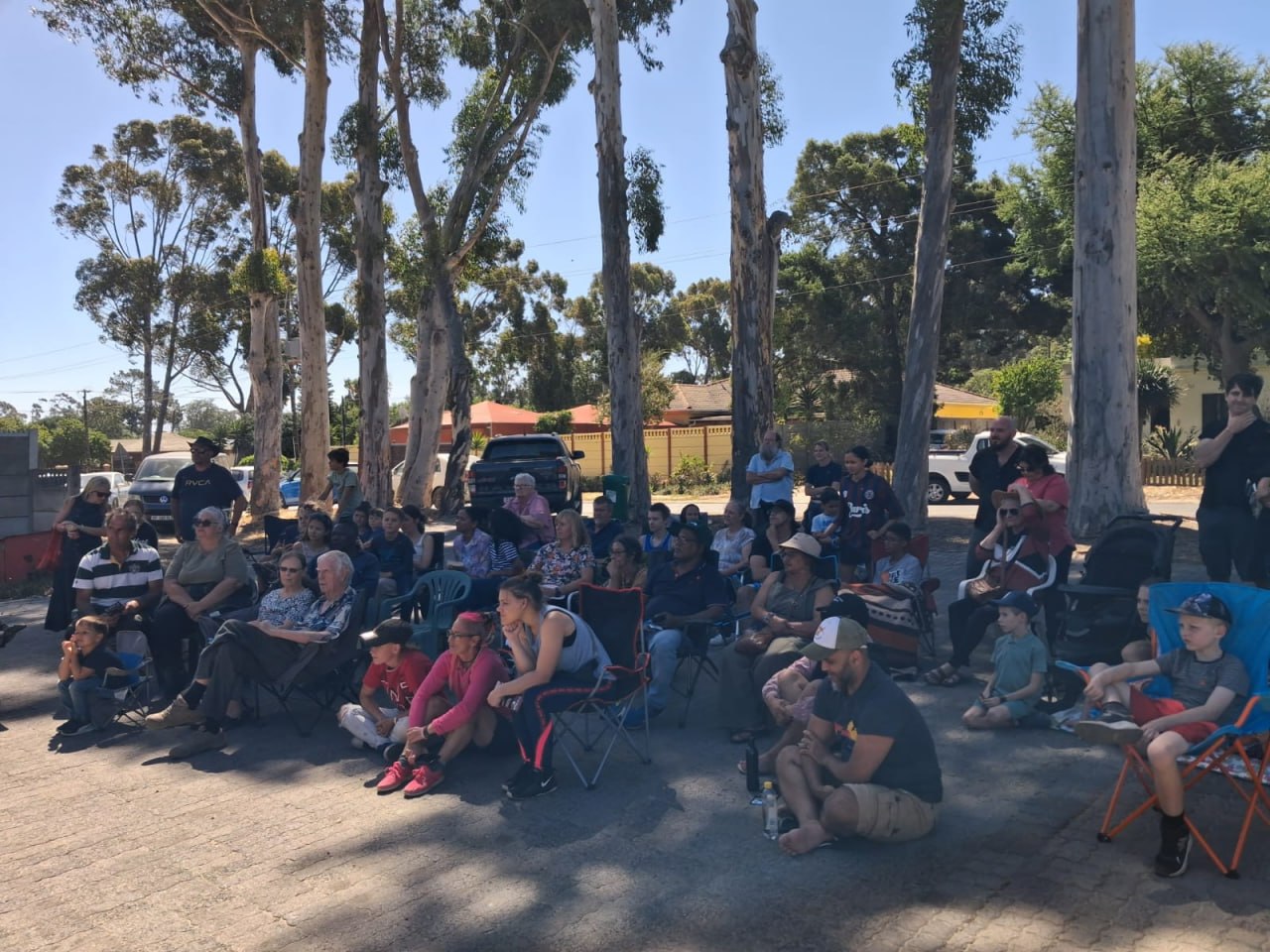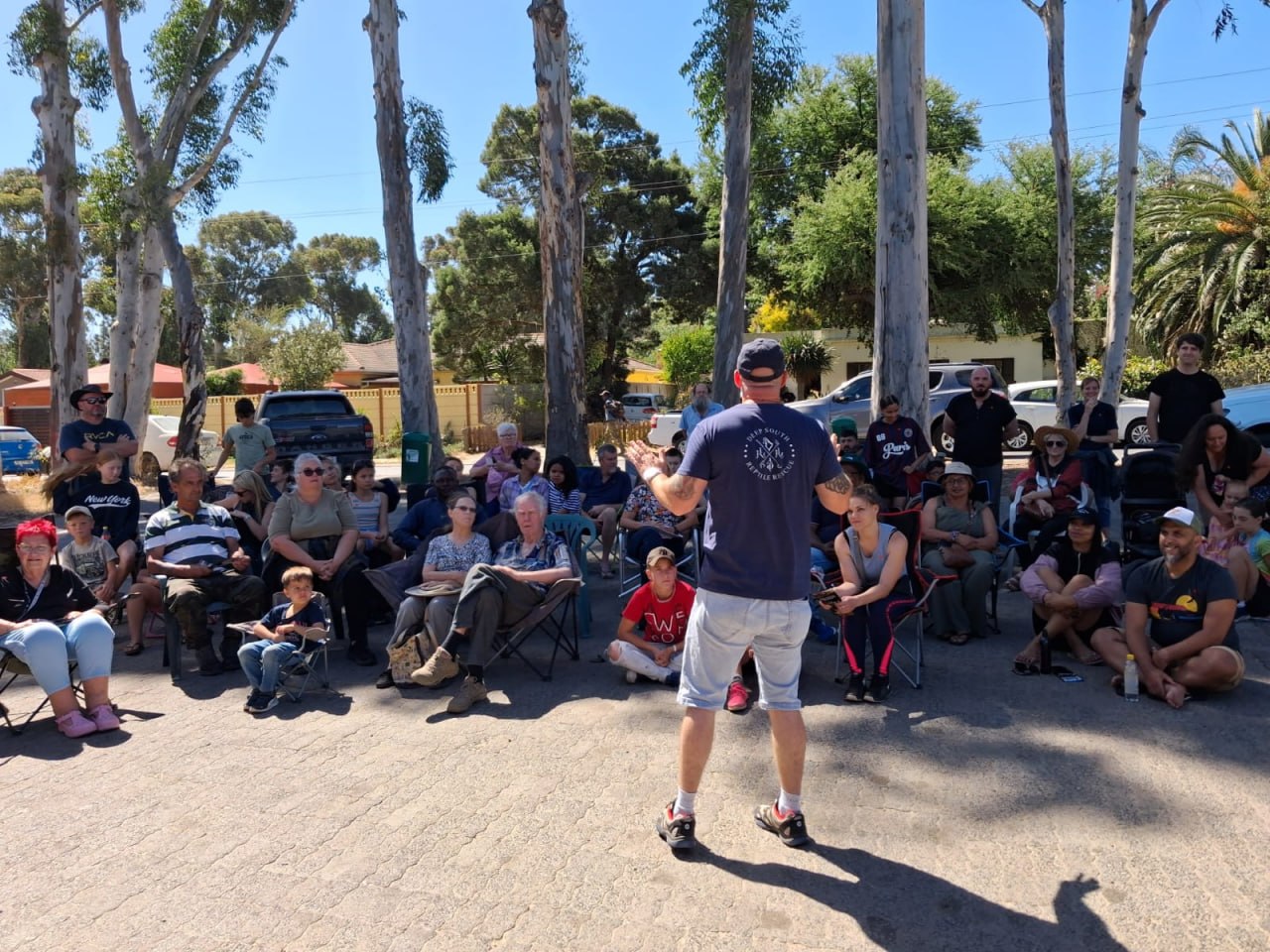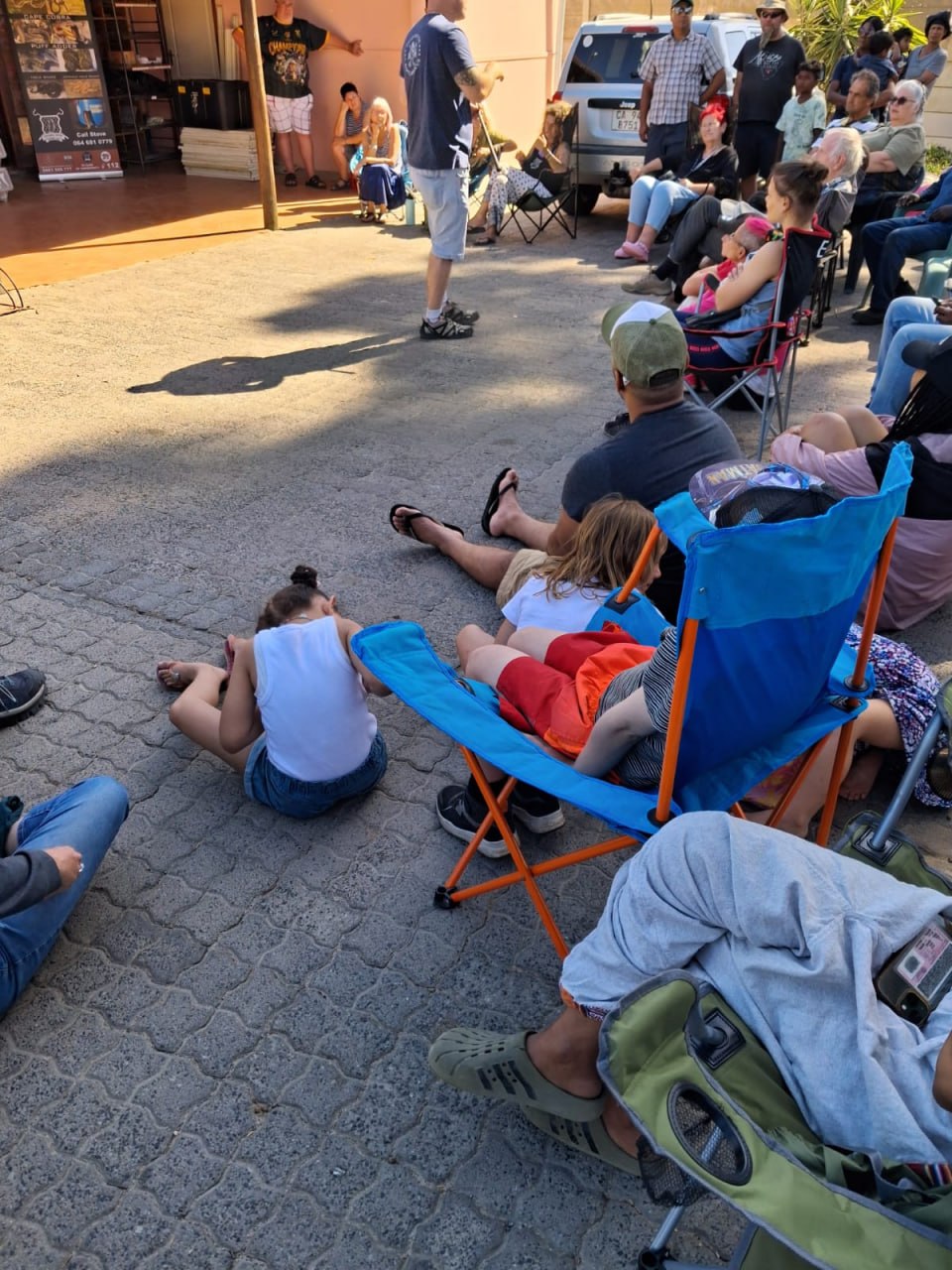
The Penhill Snake Show brings a licensed reptile handler onto the estate for a close-up, safety-focused look at some of the snakes that share the Western Cape with us. It’s a hands-on educational session for residents of all ages — the goal isn’t to scare, but to help people recognise a few of the species they might one day meet in a garden or on a walk along the river, and know what to do (and not do) if that happens. A few of the snakes featured on the day are introduced below.
Cape Cobra Naja nivea
One of the most recognisable — and most dangerous — snakes in the region, and probably the species most likely to actually be encountered around Penhill. Colour varies widely, from pale yellow through orange-brown to almost black, but the raised hood when threatened is the giveaway. Highly venomous (potent neurotoxin) and responsible for more snakebite deaths in southern Africa than any other cobra species, but like most snakes it would rather flee than confront a person — bites happen when it’s cornered or stepped on.
Boomslang Dispholidus typus
A slender, large-eyed tree snake — males are usually vivid green, females a more camouflaged brown-olive, and both are excellent at blending into foliage, which is exactly where they spend most of their time. Its venom is a potent haemotoxin (affects blood clotting), but the boomslang is shy, rear-fanged, and needs to get a real bite in to inject it — it is not aggressive and will almost always retreat rather than strike.
Mamba Dendroaspis sp.
Southern Africa’s mambas — the black mamba (Dendroaspis polylepis) and green mamba (Dendroaspis angusticeps) — are among the continent’s most feared snakes, known for speed, potent neurotoxic venom, and, in the black mamba’s case, considerable length. Despite the name, the black mamba is actually grey-to-brown in colour, named instead for the ink-black interior of its mouth, displayed as a warning when threatened. Both species prefer to avoid confrontation and use speed to escape rather than attack.
Mambas are more commonly associated with KwaZulu-Natal, the Lowveld, and further north than the Western Cape itself — included here as part of the show’s broader look at southern Africa’s notable snakes, alongside the two truly local species above.