Penhill borders open the conservation area that contains more than 250 endemic species of Cape Flats Sand fynbos, Swartland Shale Renosterveld vegetation with elements of a seasonal wetland, where nature meets residents on their doorstep with diverse bird life, intense aromas from wildflowers and wildlife sightings that would rival most nature reserves of the Western Cape. This page is a growing record of what’s been spotted around the estate — identified where possible, with an honest note where a species can’t be pinned down from a photo alone.
The Penhill Conservation Area
Penhill sits right alongside the Penhill Conservation Area, a 34-hectare biodiversity site on Hawke Road owned by the City of Cape Town. It protects two critically endangered habitat types — Cape Flats Sand Fynbos and Swartland Shale Renosterveld/Granite Fynbos — of which less than 1% remains conserved anywhere. A seasonal wetland forms here each winter, feeding local river systems, and the reserve is home to 260+ plant species (including three critically endangered ones: the Blue Afrikaner gladiolus, night-scented pelargonium, and Star satin), along with Cape grey mongoose, Cape Dwarf Chameleons, African Harrier Hawks, Spotted Eagle Owls, Cape Foxes, tortoises, butterflies and native bees.
Cape Tulip Moraea sp.
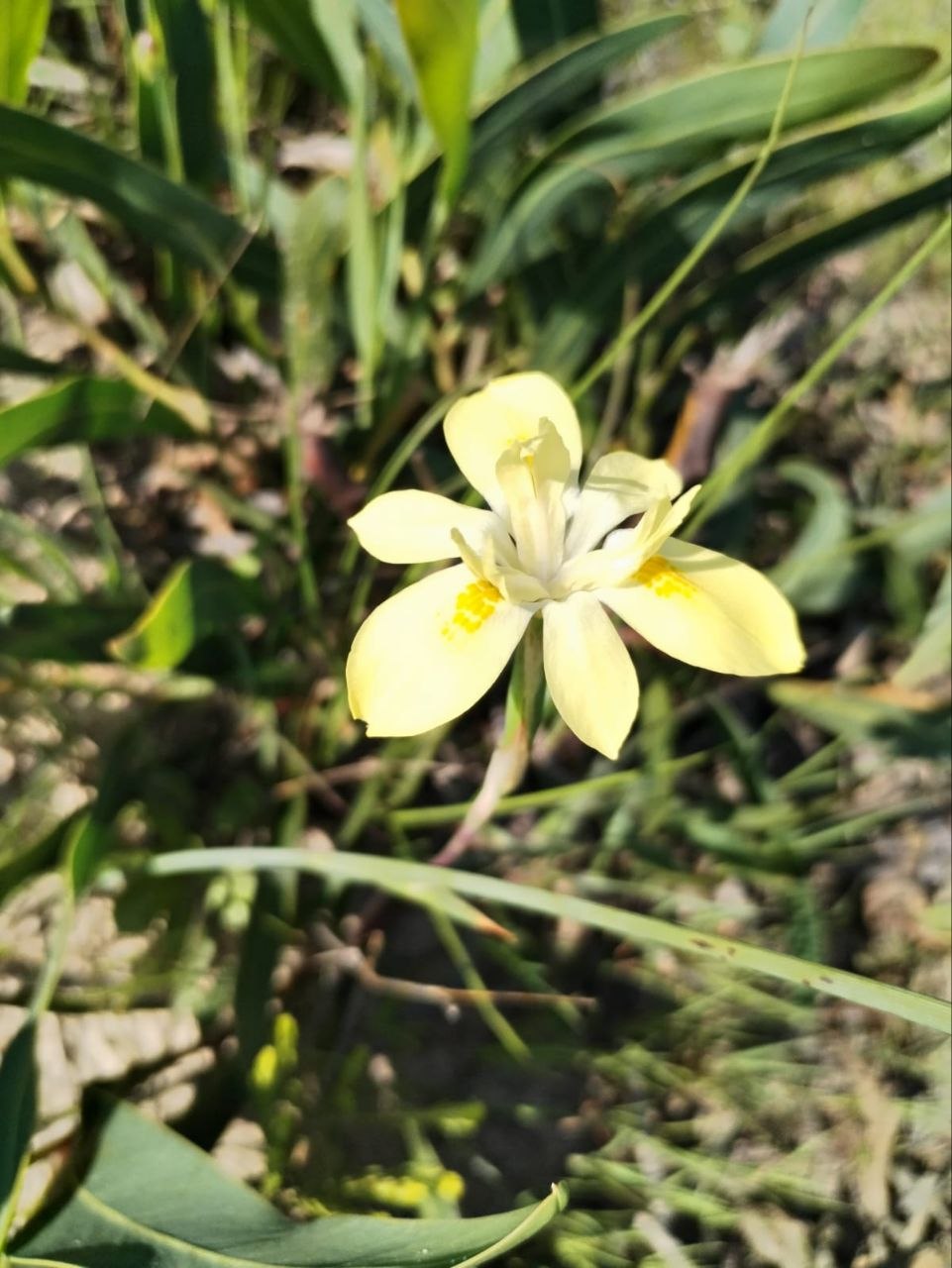
A pale creamy-yellow, six-petaled flower with a deeper orange nectar-guide blotch at the base of the lower petals, growing among strappy, iris-like leaves. Moraea is one of the largest and most common genera of Cape bulbs, with dozens of yellow-flowered species — many flowering for just a day or two at a time.
Genus confirmed; exact species (possibly M. gawleri or similar) unconfirmed.
Bobbejaantjie Babiana angustifolia
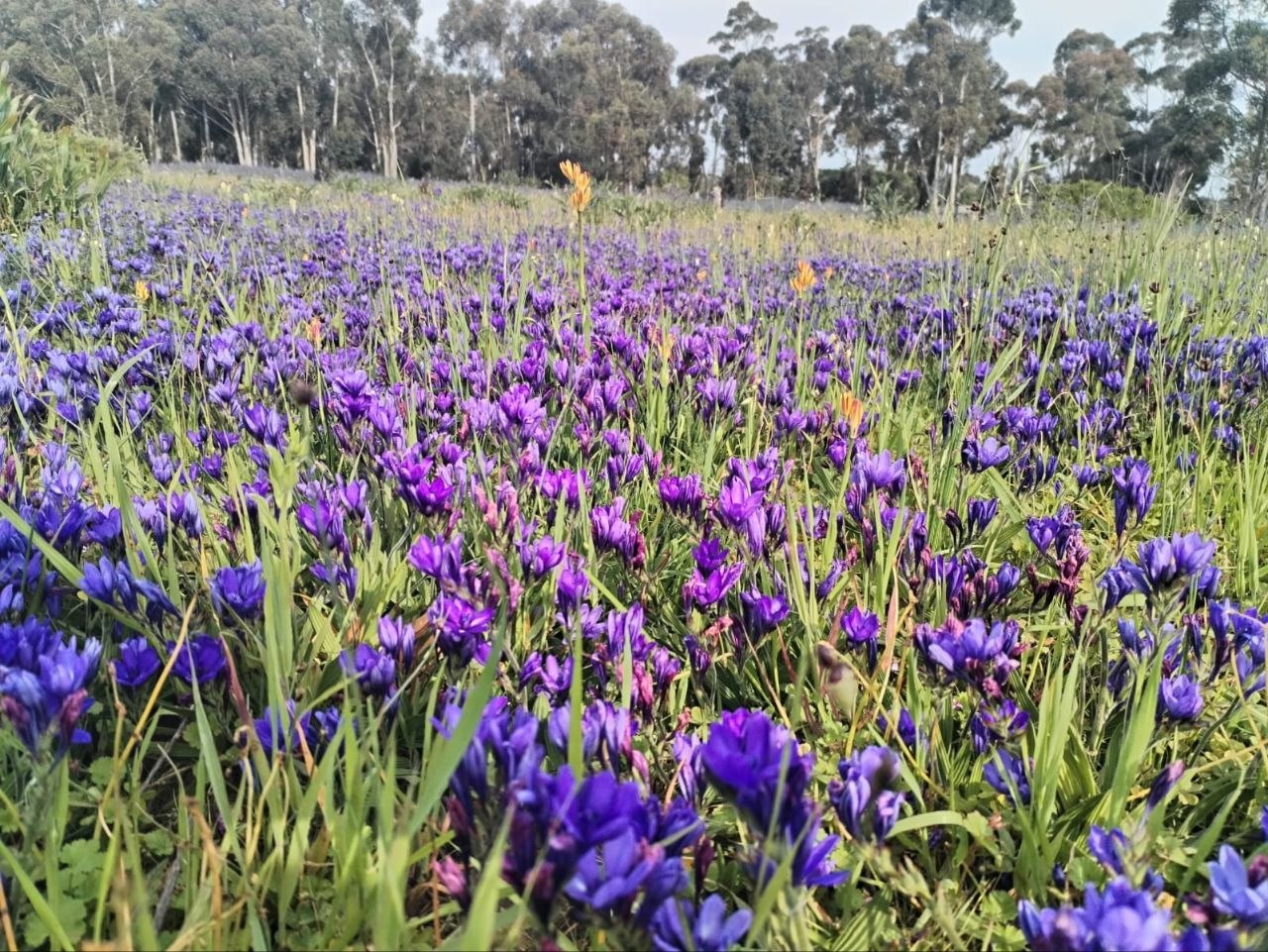
Dense carpets of vivid violet-blue, star-shaped flowers filling a seasonal vlei, with tall orange Wachendorfia-type flower spikes rising through the carpet — a classic pairing in Western Cape seasonal wetlands during late winter and early spring. Babiana, the “baboon flower”, is named for baboons digging up and eating its corms; B. angustifolia is a common blue-to-violet-flowered species of this genus found in Western Cape sandy flats and vlei margins.
Confirmed identification (Babiana angustifolia). Orange companion spikes are likely Wachendorfia sp., unconfirmed to species.
Wurmbea Wurmbea spicata
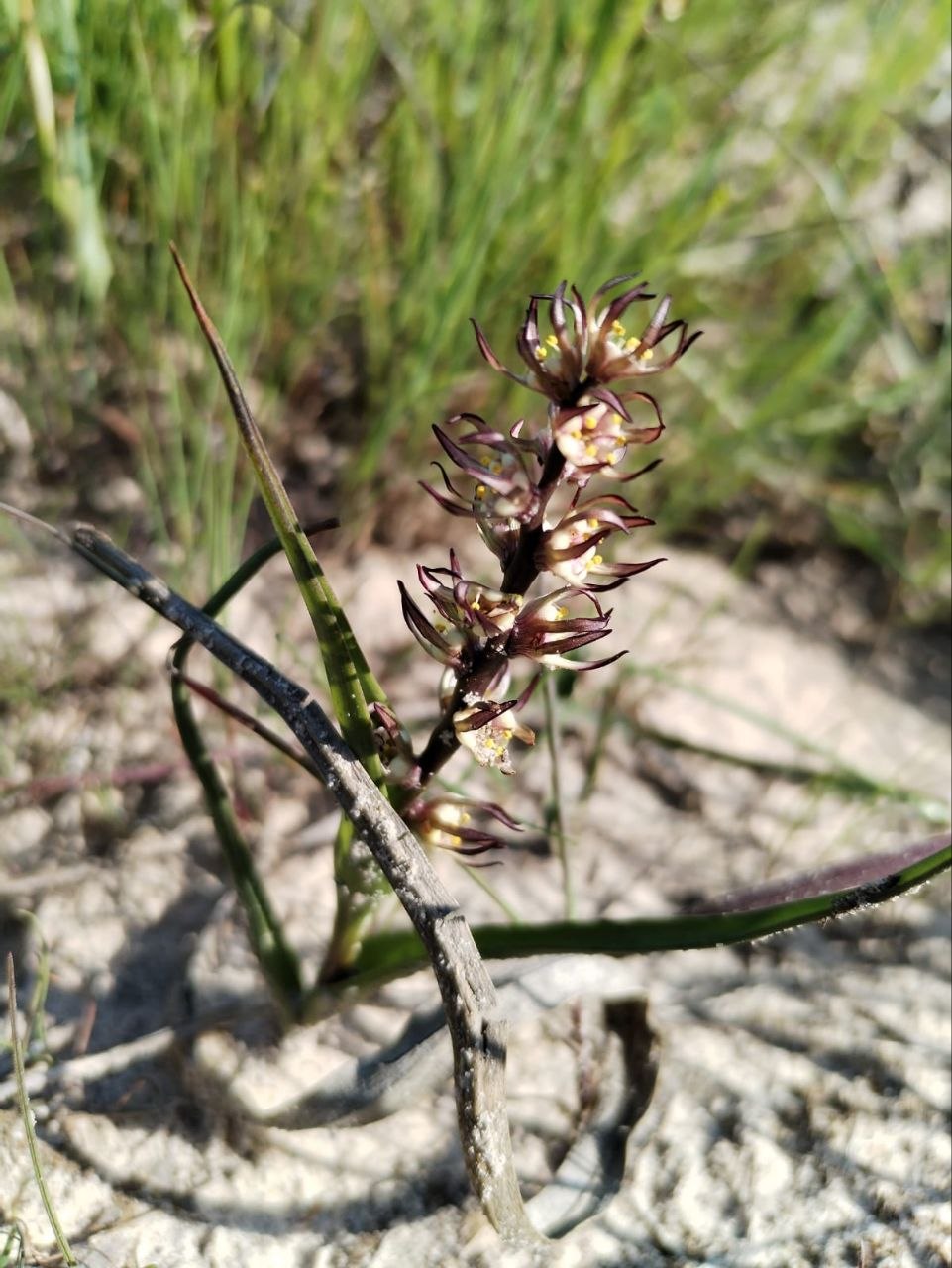
An upright spike (raceme) of small, star-shaped flowers, each cream-to-white tepal marked with a dark maroon-black blotch at its base — giving the whole spike a striking black-and-white patterned look from a distance. Wurmbea spicata is a winter-flowering Cape geophyte in the Colchicaceae family, growing from a corm in sandy fynbos flats, and is a regular late-winter/early-spring sight in the Western Cape.
Confirmed identification.
Wood Sorrel Oxalis sp.
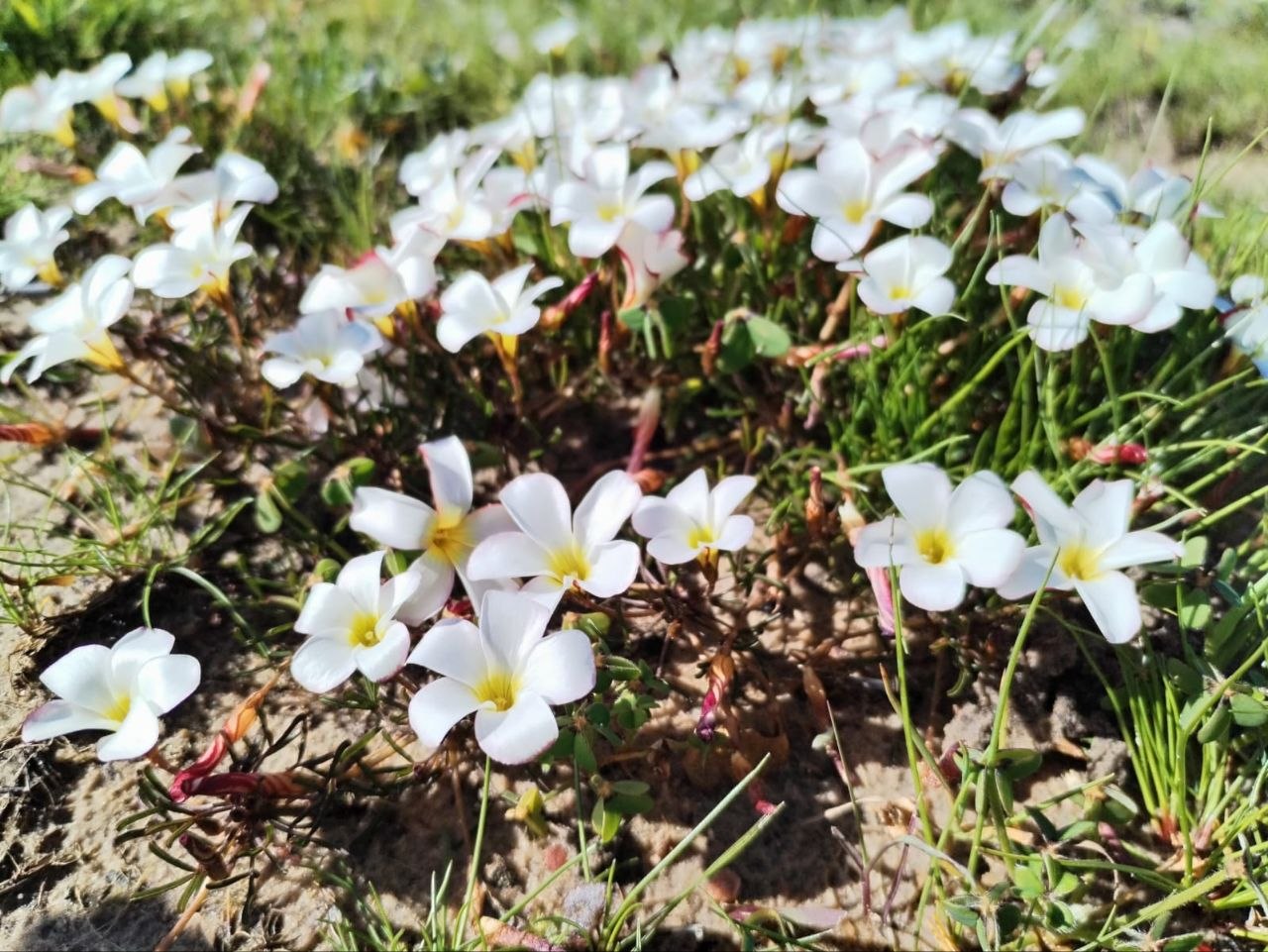
Low carpets of white, five-petaled flowers with a bright yellow throat and faint pink streaking on the petal backs, growing over sandy ground among clover-like trifoliate leaves. One of the most common and recognisable Cape wildflower genera.
Genus confirmed; likely Oxalis purpurea (white form) or O. obtusa, species not certain.
Wasp Moth Amata sp.
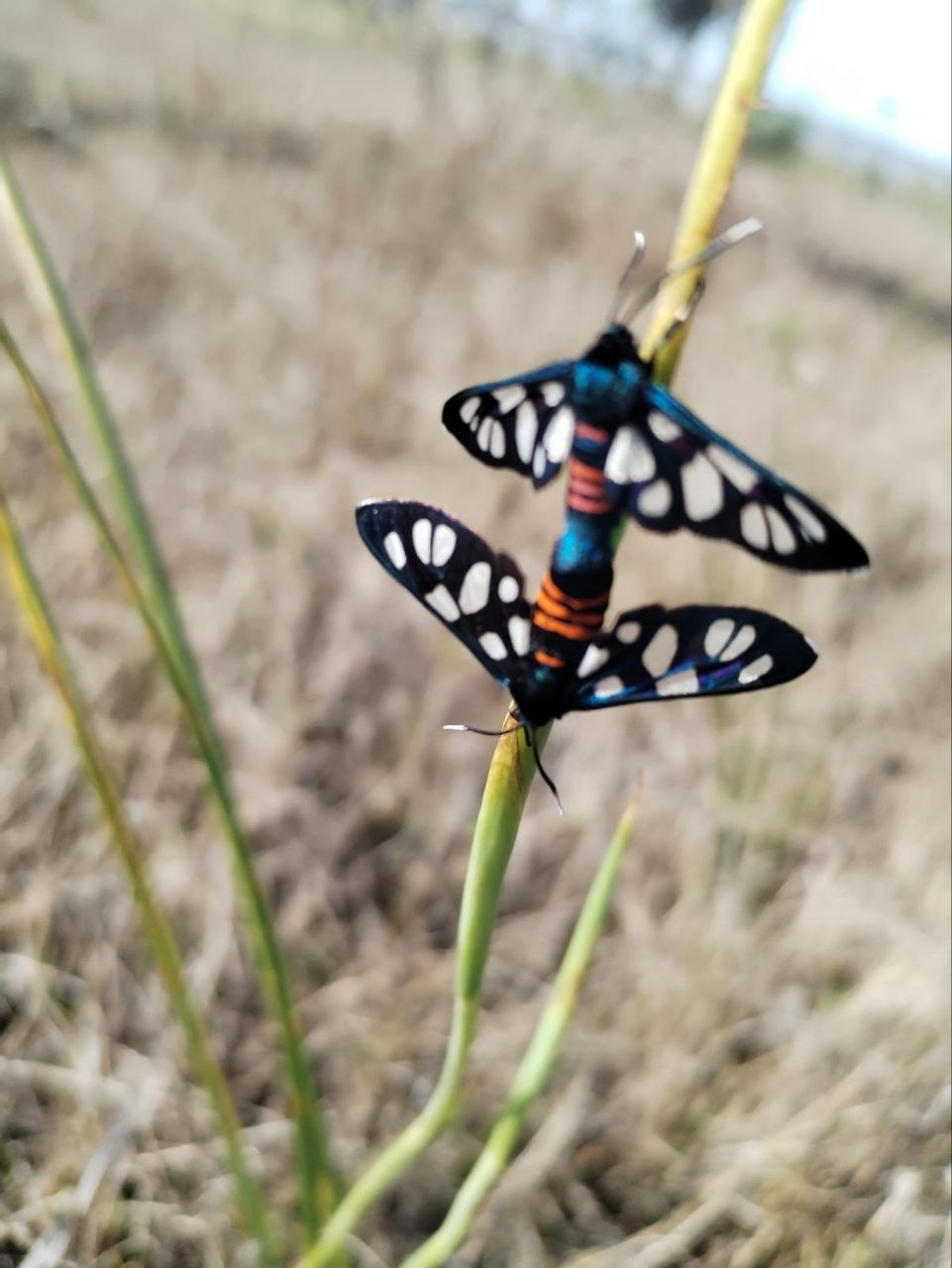
A mating pair of day-flying moths perched tail-to-tail on a grass stem — black wings with translucent, window-like clear patches ringed in black, and a metallic blue-black body banded with orange-red. These moths mimic stinging wasps for protection, a common and striking sight across southern Africa in daylight.
Genus confirmed (Amata, tribe Amatini); exact species unconfirmed.
Rain Daisy Dimorphotheca pluvialis
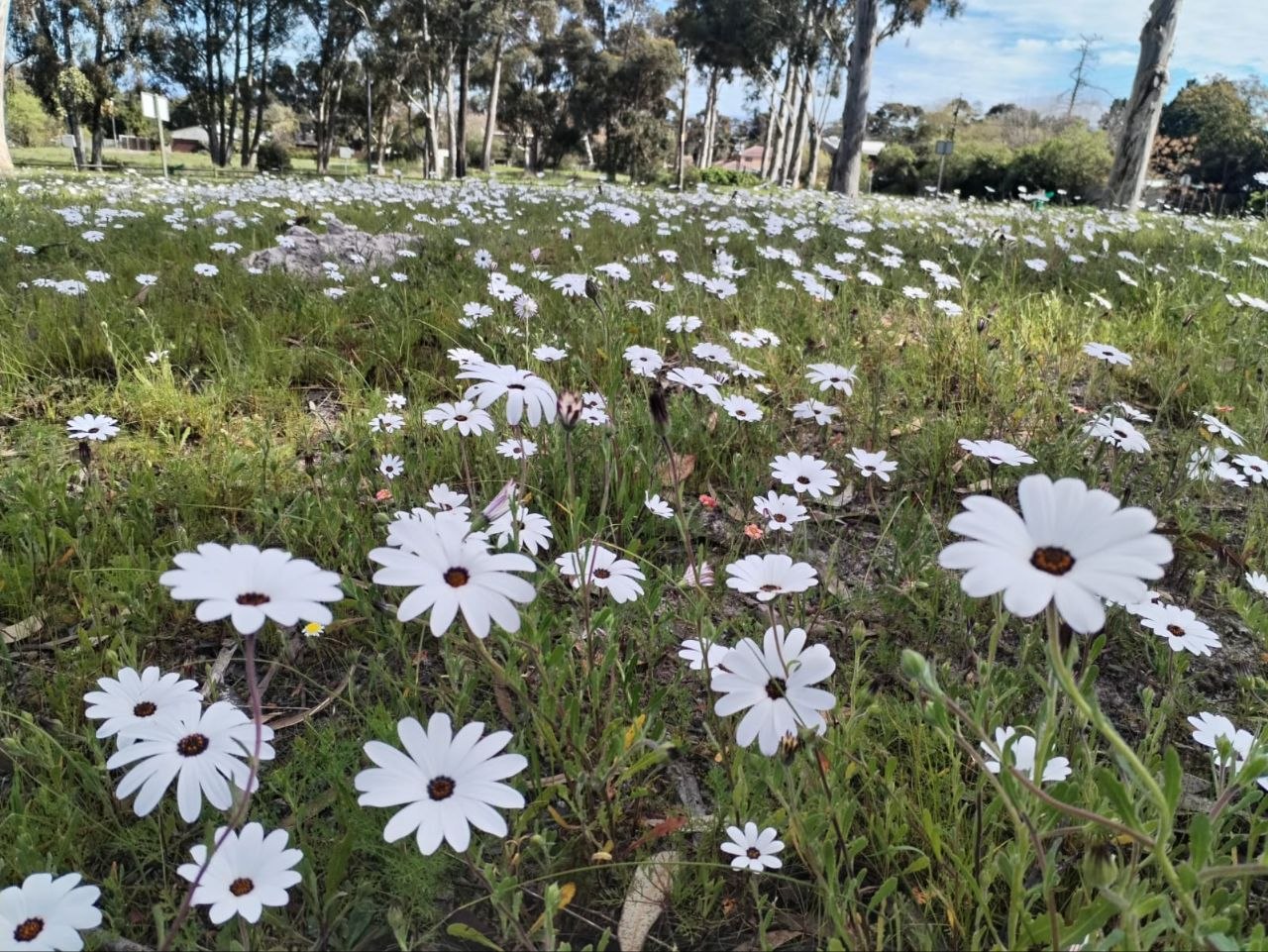
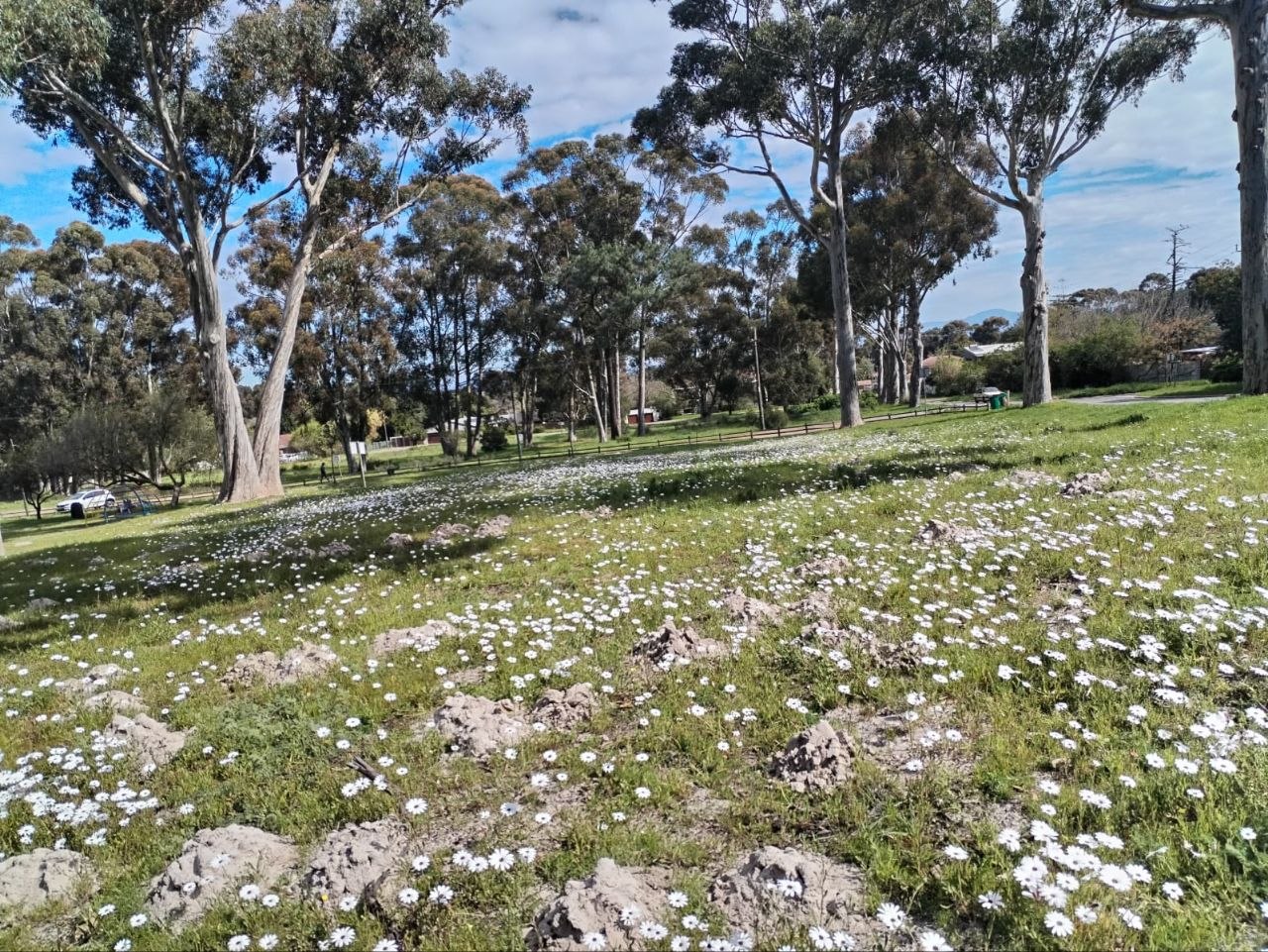
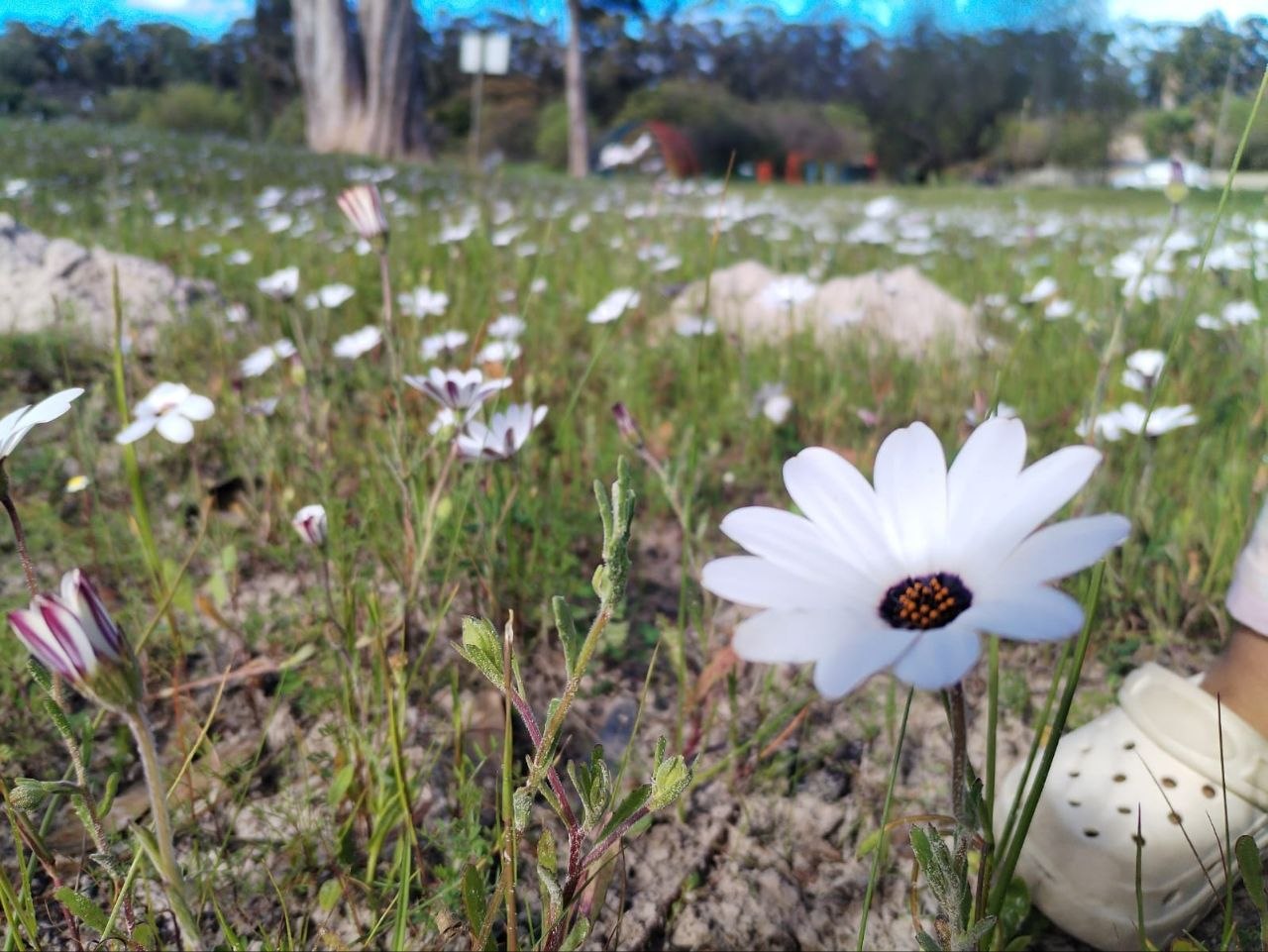
A meadow carpeted in white daisy-like flowers with dark maroon-brown centres, on tall thin stems above the grass — one of the most recognisable Cape annuals, mass-flowering after winter rain across open ground, road verges, and parks.
Confident identification, genus and species.
Angulate Tortoise Chersina angulata
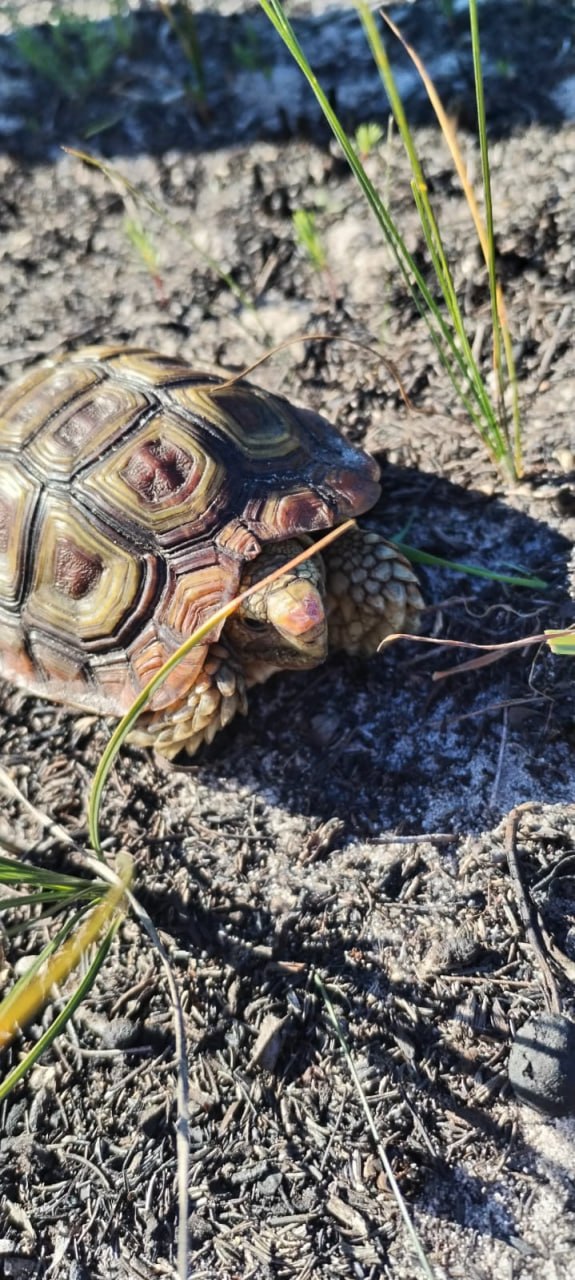
Our first reptile sighting for this page — a small tortoise with a strongly domed shell showing warm yellow-brown and dark brown concentric rings, spotted walking across sandy, recently burnt fynbos ground.
Likely the Angulate Tortoise (Chersina angulata), by far the most common tortoise in Western Cape coastal fynbos; the diagnostic forward gular projection under the chin isn’t clearly visible at this angle, so a smaller Parrot-beaked Tortoise (Homopus areolatus) remains a less likely alternative.
Wolf Spider Lycosidae, genus unconfirmed
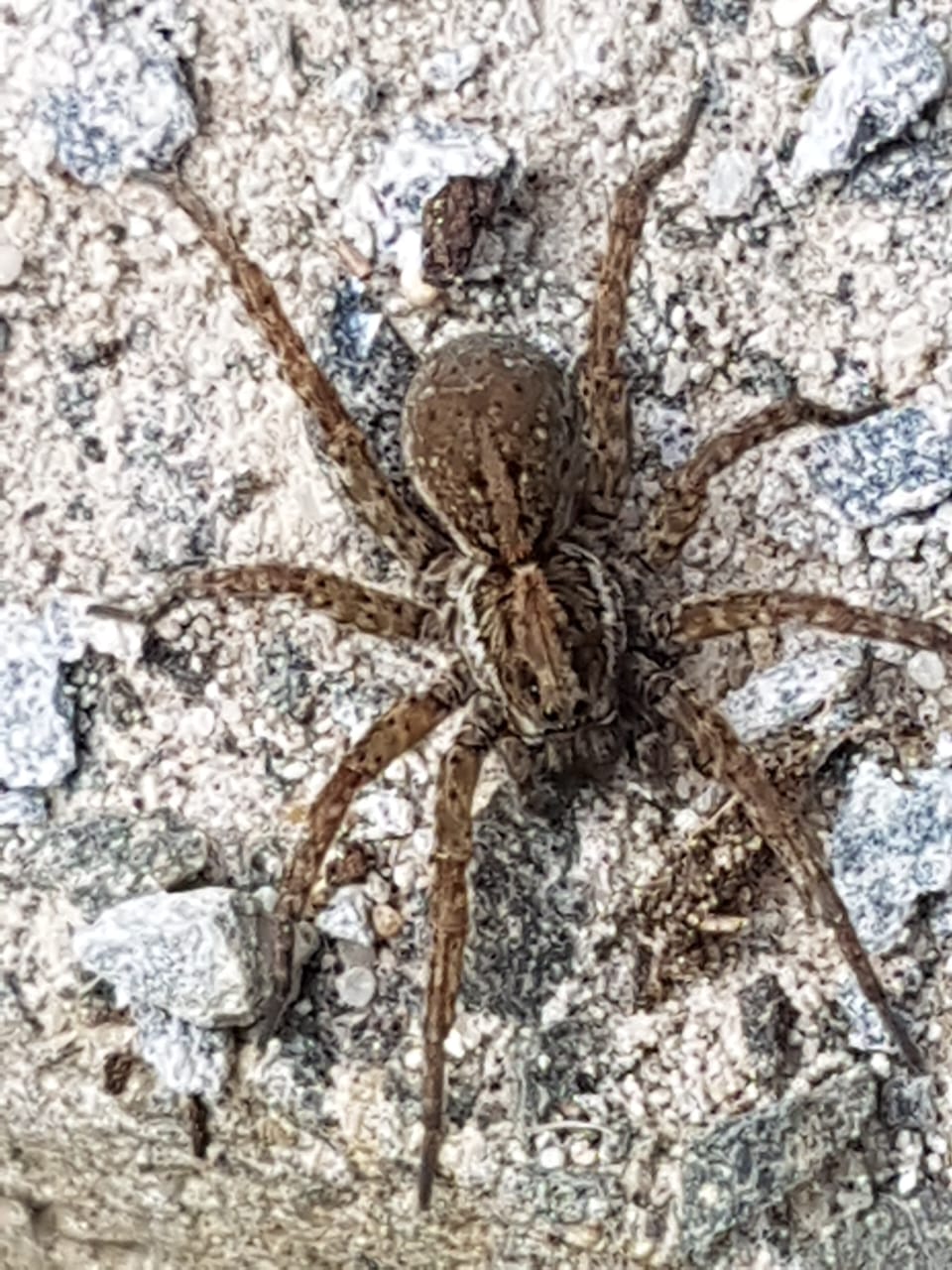
Our first arachnid sighting for this page — a robust, hairy ground spider photographed resting on paving, with long banded legs held out in a wide star around a mottled brown-and-cream body. This posture and colouring are typical of wolf spiders (family Lycosidae), which hunt on the ground rather than in webs and are common across Western Cape gardens and fynbos edges, relying on their camouflage against sand and stone.
Family-level identification only; exact genus/species unconfirmed from this photo. A huntsman/rain spider (Sparassidae, e.g. Palystes) is a less likely alternative given the leg posture shown.
Baboon Spider Theraphosidae, likely Harpactira sp.
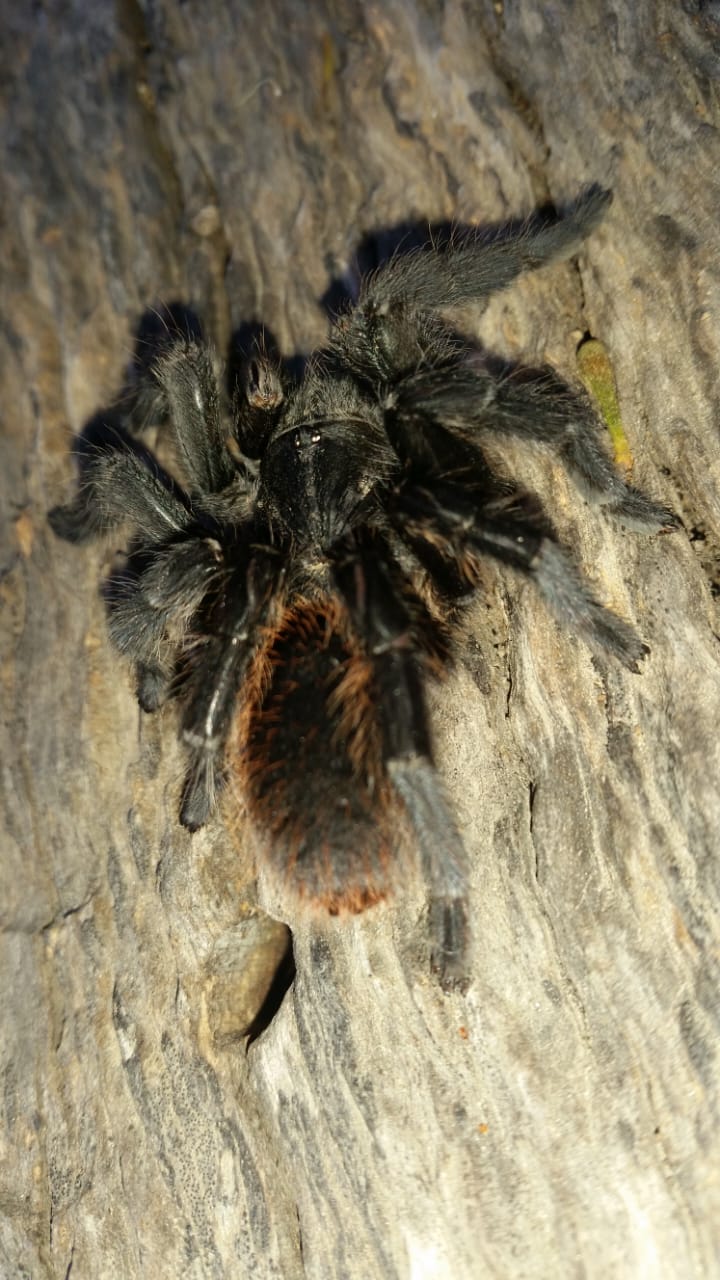
Our second arachnid sighting — a large, heavily-built tarantula photographed on tree bark, with jet-black legs and carapace and a dense, rust-orange furred abdomen. Baboon spiders (family Theraphosidae) are the African tarantulas, ground-dwelling burrowers found across southern Africa including Western Cape fynbos, and despite their size and imposing look are shy, non-aggressive, and rarely encountered above ground in daylight.
Family-level identification confident (Theraphosidae); genus tentatively Harpactira, a common Western Cape baboon spider genus with several rust/orange-abdomened species, exact species unconfirmed from this photo.